
Few topics attract more conflicting advice than food. One week a food is a miracle, the next week it is blamed for everything. If that confusion has left you unsure what to put on your plate, relax: the foundations of healthy eating are simpler and steadier than headlines suggest. Learning a few balanced diet tips will help you build meals that keep your energy stable, your hunger satisfied and your body well supplied with what it needs. Balanced diet tips are not about perfection, banned foods or expensive superfoods. They are about proportions, variety and habits you can keep for years. This guide covers the principles, plate by plate.
What a Balanced Diet Actually Means
A balanced diet gives your body the right mix of energy, protein, healthy fats, fibre, vitamins and minerals from a variety of foods. No single meal has to be perfect; balance is something you build across the day and the week. When most of your meals follow a sensible pattern, the occasional celebration meal or convenience food fits in without drama. That flexibility is exactly why balanced diet tips work in real life while strict diets usually collapse within a month.
The Balanced Plate Method
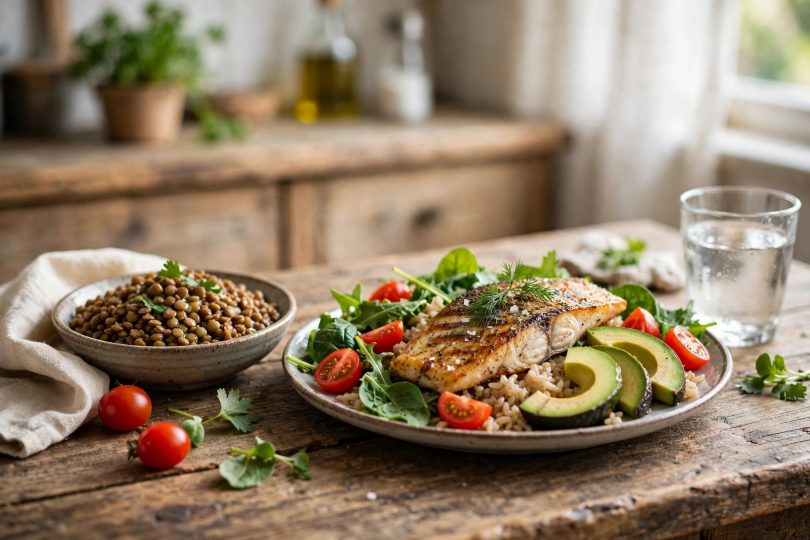
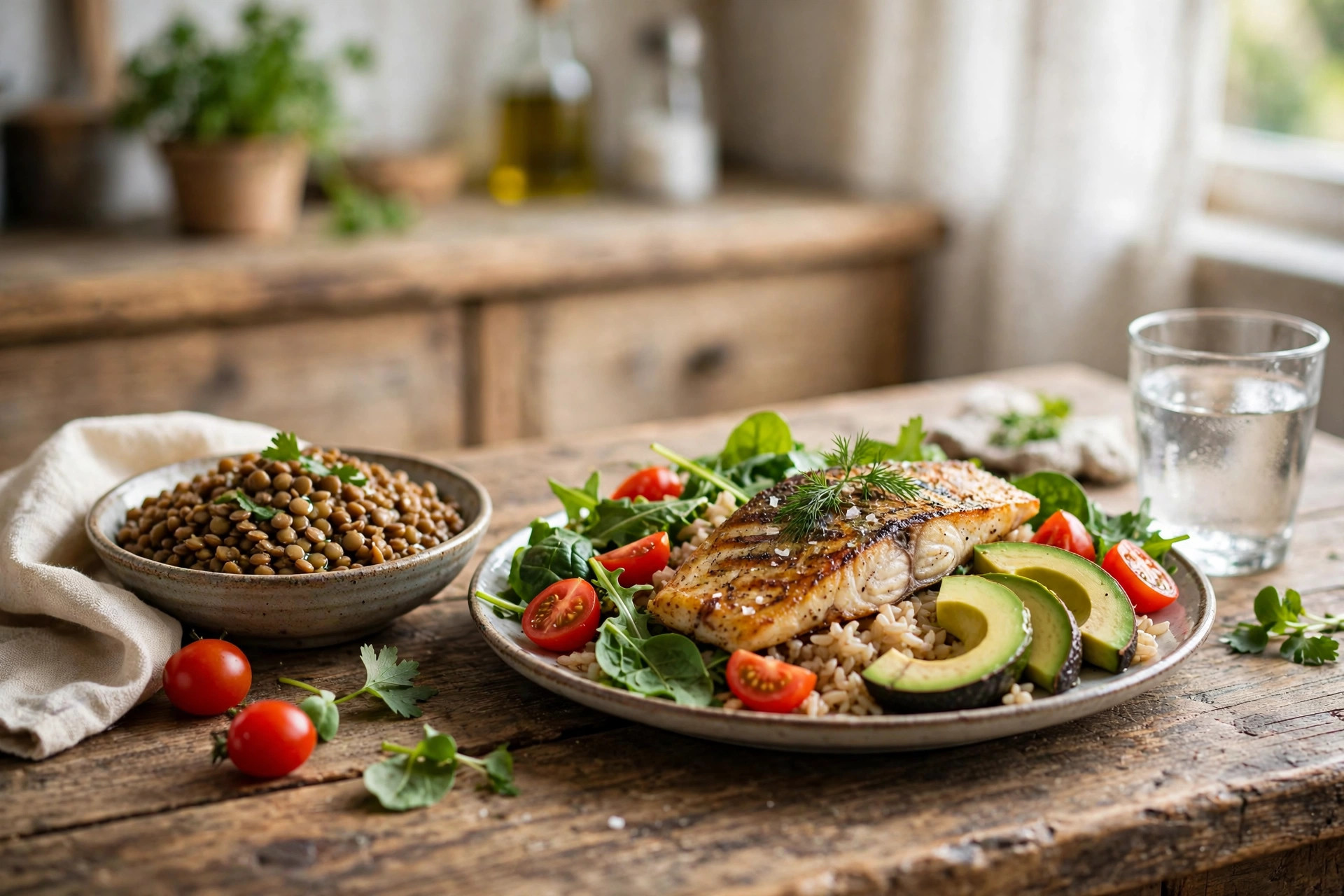
The easiest way to apply balanced diet tips is visual. Picture your plate in sections. Fill roughly half with vegetables or salad, a quarter with protein such as eggs, fish, chicken, lentils, beans or tofu, and a quarter with wholegrain carbohydrates like brown rice, wholewheat bread, oats or potatoes with their skins. Add a small amount of healthy fat, such as olive oil, nuts or seeds, and you have a meal that satisfies without complicated calculations.
Protein: Enough, Spread Through the Day
Protein builds and repairs tissue, supports immunity and keeps you full. Many people eat little protein at breakfast and a large amount at dinner, but spreading it across meals helps energy and appetite. Eggs, yoghurt, milk, pulses and fish are affordable, versatile options. If you are considering protein powders or other add-ons, our health supplement reviews explain how to judge such products sensibly before spending money on them.
Fibre: The Quiet Hero
Fibre feeds your gut, steadies blood sugar and helps you feel full on fewer calories. Vegetables, fruit, beans, lentils and wholegrains are the main sources. Most adults eat far less fibre than recommended, so small upgrades, swapping white rice for brown, adding beans to soups and salads, choosing whole fruit over juice, make a genuine difference within weeks.
Smart Choices in Each Food Group
- Vegetables and fruit: aim for variety and colour; different colours bring different nutrients. Frozen counts too and is often cheaper.
- Carbohydrates: choose wholegrain versions most of the time for fibre and steadier energy, and watch portions of refined snacks.
- Fats: favour olive oil, nuts, seeds and oily fish; keep butter, fatty processed meats and deep-fried foods occasional.
- Drinks: water first. Sugary drinks are the easiest calories to cut because they add energy without filling you up.
- Salt and sugar: taste before adding; your palate adjusts within a couple of weeks to lower levels.
Balanced Diet Tips for Real Life
Plan Just Enough
You do not need a military meal plan. Simply knowing tomorrow’s main meals prevents the hungry, tired decisions that lead to takeaways. Keep a short list of fast balanced meals you can make in fifteen minutes, eggs and vegetables, a bean chilli, grilled fish with frozen vegetables, and stock the ingredients. A weekly shop built around those staples makes healthy eating the default rather than the effort.
Eat Regularly and Pay Attention
Skipping meals often backfires into extreme hunger and rushed choices later. Regular meals with protein and fibre keep blood sugar, and therefore mood and concentration, steadier. Eating a little more slowly helps too; fullness signals take around twenty minutes to register, so a rushed meal often overshoots. You will find more routines like these throughout our Healthy Living guides.
Reading Labels Without a Degree
Labels become simple when you check three things: the ingredient list (shorter and more recognisable is usually better), the sugar and salt content per portion, and whether the portion on the label matches the portion you will actually eat. Marketing words on the front of the packet, “natural”, “light”, “low fat”, often hide high sugar or salt, which is why the small print matters. Our healthy product reviews apply exactly this approach when comparing everyday products.
Special Situations
Vegetarians and vegans can eat a fully balanced diet with attention to protein variety, iron, vitamin B12 and omega-3 sources. People managing diabetes, kidney disease or other conditions need personalised advice, because general tips interact with treatment; in those cases, use guides for background and a qualified professional for decisions. Children, pregnancy and older age also shift needs somewhat, mainly around protein, calcium, iron and total energy.
A Simple Day of Balanced Eating
Principles become easier when you can picture them on a real day. Breakfast might be oats with yoghurt, berries and a spoonful of seeds, or eggs on wholegrain toast with tomatoes. Lunch could be a large salad built on beans or chicken, with wholegrain bread on the side. Dinner might be grilled fish or a lentil curry with brown rice and two vegetables, seasoned generously with herbs and spices rather than salt. Snacks, if you want them, are fruit, a small handful of nuts, or yoghurt rather than biscuits eaten at a desk without noticing. Drinks through the day are mostly water, with tea or coffee taken without sugar or with steadily less of it. Notice what this day does not contain: special products, separate family meals, or hunger. It is ordinary food in sensible proportions, which is exactly the point of balanced eating.
When Eating Out or Ordering In
Restaurants are not a problem to solve but a pleasure to manage. Look at the menu for grilled rather than fried dishes, ask for dressings and sauces on the side, and add a vegetable side instead of doubling the chips. Portions are often larger than home servings, so eat slowly and stop when you are comfortably full rather than when the plate is empty. Small decisions like these keep the overall pattern balanced without turning social meals into stressful ones.
Conclusion
Healthy eating does not need to be complicated or expensive.
Build most plates around vegetables, sensible protein and wholegrains, drink water first, read labels with a sceptical eye, and keep a few fast meals ready for busy days. Apply these balanced diet tips consistently and food stops being a source of stress. It becomes what it should be: steady fuel for the life you want to live, with room left for enjoyment.