
Living a happy and healthy life is not about being perfect—it’s about finding the right balance in your daily routine. A balanced lifestyle means taking care of your physical health, mental well-being, emotional wellness, work responsibilities, and personal relationships. When these areas are in balance, you feel more energetic, less stressed, and better prepared to enjoy everyday life.
Many people struggle to manage work, family, health, and personal time all at once. As a result, they often experience stress, poor sleep, unhealthy eating habits, and a lack of exercise. The good news is that you don’t need to make huge changes overnight. Small, consistent improvements can help you create a healthier and more balanced lifestyle.
This Balanced Lifestyle Guide is designed to help you understand the importance of balance and show you practical ways to improve your daily routine. From healthy eating and regular exercise to better sleep, stress management, time management, and self-care, you’ll learn simple habits that can make a lasting difference.
Whether you’re a student, a working professional, a parent, or someone simply looking to improve your quality of life, following this Balanced Lifestyle Guide will help you build healthy routines, stay motivated, and achieve long-term physical and mental well-being. By making one positive choice each day, you can create a balanced lifestyle that supports a healthier, happier, and more fulfilling future.
Why a Balanced Lifestyle Is Important
Living a balanced lifestyle is essential for maintaining good physical health, mental well-being, and emotional stability. When you give proper attention to different areas of your life, such as nutrition, exercise, sleep, work, relationships, and relaxation, you create a healthier and more satisfying way of living.
Many health problems develop because of unhealthy daily routines, stress, poor eating habits, and lack of physical activity. Following a balanced lifestyle helps prevent these problems and improves your overall quality of life.
Improves Physical Health
One of the biggest benefits of a balanced lifestyle is better physical health. Healthy daily habits help your body function properly and reduce the risk of many illnesses.
Physical health benefits include:
- Stronger immune system.
- Healthy body weight.
- Better heart health.
- Stronger muscles and bones.
- Improved digestion.
- Higher energy levels.
When your body is healthy, it becomes easier to enjoy everyday activities and stay active.
Supports Mental Well-Being
A balanced lifestyle also protects your mental and emotional health. Making time for relaxation, hobbies, family, and self-care helps reduce stress and improve your mood.
Some mental health benefits include:
- Reduced anxiety.
- Better emotional balance.
- Improved confidence.
- Greater happiness.
- Better concentration.
- Positive thinking.
A healthy mind helps you make better decisions and handle life’s challenges more effectively.
Reduces Stress
Stress is a normal part of life, but too much stress can affect both your physical and mental health. A balanced lifestyle helps you manage stress in healthy ways.
You can reduce stress by:
- Exercising regularly.
- Getting enough sleep.
- Taking short breaks during work.
- Practising deep breathing.
- Spending time outdoors.
- Talking with family and friends.
Managing stress helps you feel calmer and more relaxed throughout the day.
Increases Energy and Productivity
Healthy habits provide your body with the energy it needs to stay active and focused. When you eat nutritious foods, exercise, and sleep well, your productivity naturally improves.
Benefits include:
- Better focus.
- Improved work performance.
- Increased motivation.
- More energy.
- Better time management.
- Greater efficiency.
A balanced lifestyle helps you accomplish more without feeling overwhelmed.
you may also like it;
Healthy Product Reviews for Smarter Choices
Wellness Product Guide for a Healthier Lifestyle
Fitness Equipment Reviews for Smarter Buying
Health Supplement Reviews for Smarter Choices
Helps Build Stronger Relationships
Spending quality time with family and friends is an important part of living a balanced life. Healthy relationships provide emotional support and increase overall happiness.
Strong relationships help you:
- Feel supported.
- Improve communication.
- Reduce loneliness.
- Build trust.
- Create lasting memories.
- Enjoy better emotional health.
Making time for loved ones strengthens your personal life.
Encourages Better Work-Life Balance
Many people become overwhelmed by work because they don’t set healthy boundaries. A balanced lifestyle encourages you to divide your time wisely between work, personal responsibilities, and relaxation.
Healthy work-life balance helps you:
- Prevent burnout.
- Reduce work-related stress.
- Enjoy more personal time.
- Improve family relationships.
- Stay motivated at work. Balanced Lifestyle Guide
- Maintain better overall health.
Finding balance makes both your professional and personal life more enjoyable.
Leads to Long-Term Happiness
A balanced lifestyle is not just about staying healthy today—it also helps you build a happier future. By maintaining healthy habits, managing your time wisely, caring for your relationships, and looking after your physical and mental health, you create a lifestyle that supports long-term success and well-being. Small daily improvements may seem simple, but together they can transform your life and help you enjoy greater happiness, confidence, and fulfilment for many years to come. Balanced Lifestyle Guide
Build Healthy Daily Habits
Healthy daily habits are the foundation of a balanced lifestyle. The small choices you make every day have a big impact on your health, happiness, and productivity. Instead of trying to change everything at once, focus on creating simple routines that you can follow consistently. Over time, these habits become part of your daily life and help you achieve long-term well-being. Balanced Lifestyle Guide
The key to success is consistency. Even small positive actions repeated every day can produce lasting results.
Start Your Day with a Healthy Routine
Your morning routine sets the tone for the rest of the day. Starting your day with healthy habits helps you feel more organised, energetic, and motivated.
Healthy morning habits include:
- Wake up at the same time every day.
- Drink a glass of water.
- Stretch your body.
- Eat a healthy breakfast.
- Plan your daily tasks. Balanced Lifestyle Guide
- Spend a few minutes relaxing or practising gratitude.
A positive morning routine helps you begin each day with focus and confidence.
Create a Consistent Daily Schedule
Having a daily routine makes it easier to manage your responsibilities while reducing stress. A consistent schedule helps you stay organised and use your time more effectively.
A healthy daily schedule should include:
- Regular meal times.
- Exercise.
- Work or study.
- Short breaks.
- Family time.
- Relaxation. Balanced Lifestyle Guide
- Bedtime at the same hour.
Following a routine creates stability and supports a balanced lifestyle.
Set Realistic Goals
Setting small, achievable goals makes it easier to build healthy habits. Trying to change everything at once often leads to frustration.
Examples of simple goals include:
- Walk for 30 minutes every day.
- Drink eight glasses of water.
- Eat vegetables with every meal.
- Sleep for at least seven hours. Balanced Lifestyle Guide
- Read for 20 minutes each day.
Achieving small goals builds confidence and keeps you motivated.
Stay Consistent
Consistency is more important than perfection. Missing one day doesn’t mean you’ve failed. Simply return to your routine the next day and continue building your healthy habits.
Remember:
- Focus on progress, not perfection.
- Build one habit at a time.
- Celebrate small achievements. Balanced Lifestyle Guide
- Stay patient with yourself.
Long-term success comes from repeating healthy actions every day.
Avoid Unhealthy Habits
Building healthy routines also means reducing habits that negatively affect your well-being.
Try to avoid:
- Skipping meals.
- Staying up late regularly.
- Eating too much fast food.
- Sitting for long periods.
- Spending excessive time on social media.
- Ignoring stress. Balanced Lifestyle Guide
Replacing unhealthy habits with healthier alternatives helps you maintain balance.
Track Your Progress
Keeping track of your habits helps you stay motivated and identify areas where you can improve. Seeing your progress encourages you to continue working toward your goals.
You can track your habits by:
- Using a notebook. Balanced Lifestyle Guide
- Keeping a daily checklist.
- Using a habit-tracking app.
- Recording weekly achievements Balanced Lifestyle Guide.
Tracking progress makes it easier to stay committed to your healthy lifestyle.
Be Flexible with Your Routine
Life doesn’t always go according to plan, and that’s perfectly normal. A balanced lifestyle allows room for flexibility. If you miss a workout or have an unhealthy meal occasionally, don’t give up. Focus on getting back to your healthy routine as soon as possible.
Being flexible helps you maintain healthy habits without unnecessary stress.
Healthy Daily Habits Create Lasting Success
Every healthy habit you build today becomes an investment in your future. Whether it’s eating nutritious meals, exercising regularly, staying organised, or getting enough sleep, these simple actions improve your health over time. A balanced lifestyle is created through consistent daily habits, and each positive choice brings you one step closer to a healthier, happier, and more fulfilling life. Balanced Lifestyle Guide
Eat a Healthy and Balanced Diet

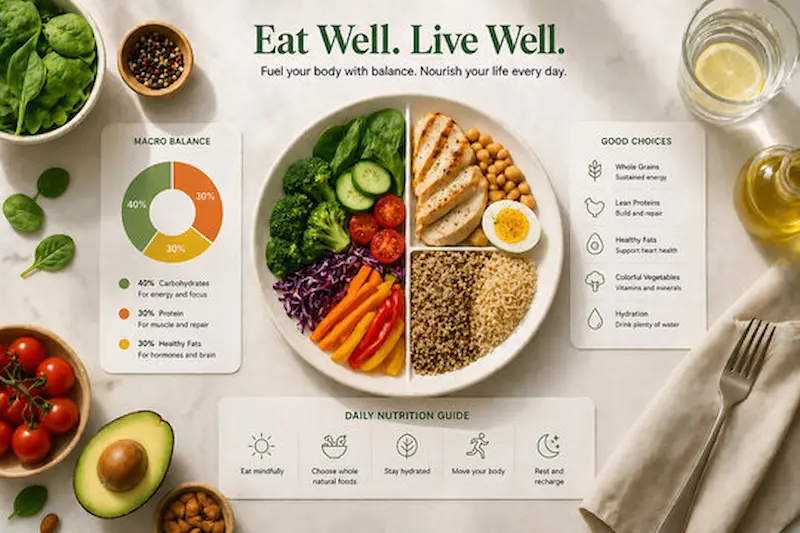
Eating a healthy and balanced diet is one of the most important parts of a balanced lifestyle. The food you eat provides your body with the energy and nutrients it needs to stay active, grow, repair itself, and function properly. Making healthy food choices every day can improve your overall health, strengthen your immune system, and help prevent many diseases.
A balanced diet does not mean giving up your favourite foods completely. It means enjoying a variety of nutritious foods while limiting unhealthy options. Balanced Lifestyle Guide
Include More Fruits and Vegetables
Fruits and vegetables are packed with vitamins, minerals, fibre, and antioxidants that support good health.
Benefits of eating more fruits and vegetables include:
- Better digestion.
- Stronger immune system.
- Healthier skin. Balanced Lifestyle Guide
- Improved heart health.
- Lower risk of chronic diseases.
- Increased energy.
Try to include colourful fruits and vegetables in your meals every day.
Choose Whole Grains
Whole grains provide more fibre and nutrients than refined grains. They help you stay full for longer and support healthy digestion.
Healthy whole-grain options include:
- Brown rice.
- Oats.
- Whole wheat bread.
- Whole grain pasta. Balanced Lifestyle Guide
- Quinoa.
- Barley.
Replacing refined grains with whole grains is a simple way to improve your daily nutrition.
Eat Lean Protein
Protein is essential for building muscles, repairing tissues, and keeping your body strong.
Healthy protein sources include: Balanced Lifestyle Guide
- Chicken.
- Fish.
- Eggs.
- Beans.
- Lentils.
- Tofu.
- Low-fat dairy.
- Nuts and seeds.
Including protein in every meal helps maintain steady energy levels throughout the day.
Choose Healthy Fats
Not all fats are harmful. Healthy fats support brain function, heart health, and hormone production.
Healthy fat sources include: Balanced Lifestyle Guide
- Avocados.
- Olive oil.
- Almonds.
- Walnuts.
- Chia seeds.
- Flaxseeds.
- Fatty fish.
Replacing unhealthy fats with healthier options can improve your overall well-being.
Control Portion Sizes
Eating healthy foods is important, but eating the right amount is equally important. Large portions may lead to overeating and weight gain.
Simple portion control tips include:
- Use smaller plates.
- Eat slowly.
- Stop eating when you feel satisfied.
- Avoid eating while watching television.
- Read nutrition labels. Balanced Lifestyle Guide
Mindful eating helps maintain a healthy weight.
Limit Sugar and Processed Foods
Many processed foods contain large amounts of sugar, unhealthy fats, and salt. Eating these foods regularly may increase the risk of obesity, diabetes, and heart disease.
Try to reduce:
- Soft drinks.
- Packaged snacks.
- Fast food.
- Sugary desserts.
- Processed meats. Balanced Lifestyle Guide
- Highly processed ready meals.
Choosing fresh, home-cooked meals is usually a healthier option.
Eat Meals on Time
Having meals at regular times helps maintain steady energy levels and supports healthy digestion.
Healthy meal habits include:
- Never skip breakfast.
- Eat lunch on time.
- Have a balanced dinner.
- Avoid late-night eating.
- Choose healthy snacks if needed.
A regular eating schedule helps your body function more efficiently.
Make Healthy Eating a Lifelong Habit
Healthy eating should become part of your everyday lifestyle rather than a short-term diet. Focus on making better food choices most of the time instead of trying to be perfect. By eating nutritious meals, controlling portions, drinking enough water, and limiting processed foods, you can improve your health, maintain a healthy weight, and enjoy a more balanced lifestyle for years to come. Balanced Lifestyle Guide
What is a balanced lifestyle?
A balanced lifestyle means maintaining a healthy balance between your physical health, mental well-being, work, relationships, personal growth, and relaxation. It helps you live a healthier, happier, and more fulfilling life.
Why is a balanced lifestyle important?
A balanced lifestyle improves your overall health, reduces stress, increases energy, supports better mental health, strengthens relationships, and helps prevent many lifestyle-related diseases.
How can I start living a balanced lifestyle?
Start with small daily changes such as eating healthy meals, exercising regularly, drinking enough water, getting enough sleep, managing your time wisely, and making time for relaxation and family.
Conclusion
Following this Balanced Lifestyle Guide is one of the best ways to improve your overall health, happiness, and quality of life. A balanced lifestyle is not about making perfect choices every day. Instead, it is about creating healthy routines that support your physical health, mental well-being, emotional balance, and personal growth.
Simple habits like eating nutritious meals, exercising regularly, getting enough sleep, managing stress, spending time with loved ones, and making time for yourself can have a powerful impact over time. These small daily actions work together to help you feel more energetic, confident, productive, and fulfilled.
Remember that every person’s journey is different. Focus on making gradual improvements that fit your lifestyle rather than trying to change everything at once. Staying consistent with healthy habits is the key to achieving long-term success.
By applying the tips in this Balanced Lifestyle Guide, you can build a healthier routine, reduce stress, improve your relationships, and enjoy a more balanced and meaningful life. Start with one positive habit today, keep moving forward, and let each healthy choice bring you closer to a happier, healthier future.