
If you wake up tired even after a full night in bed, the problem is rarely the number of hours you slept. More often, it is the quality of those hours, and quality is something you can improve. Building healthy sleep habits is one of the simplest and most powerful things you can do for your energy, mood, memory and long-term health. Healthy sleep habits do not require expensive gadgets or medication. They come from small, repeatable choices in the hours before bed and the way you treat your bedroom. This guide explains the habits that matter most and how to build them one week at a time.
Why Sleep Quality Matters More Than Quantity
During deep sleep, your body repairs muscle, consolidates memories, balances hormones and clears waste products from the brain. When sleep is fragmented by light, noise, irregular hours or late-night scrolling, you spend less time in those restorative stages, even if you were technically in bed for eight hours. The result is familiar: grogginess, poor concentration, stronger food cravings and a shorter temper. People who protect their sleep consistently report better focus at work and steadier energy without relying on caffeine all day.
Sleep also connects closely with the rest of your health. Our medical health guide explains how poor sleep is linked with blood pressure, blood sugar control and immune function, which is why doctors ask about sleep during almost every check-up. Treating sleep as a foundation, rather than a luxury, changes how you plan your evenings.
The Core Healthy Sleep Habits
Keep a Consistent Sleep Schedule
Your body runs on an internal clock that works best with regular timing. Going to bed and waking up at roughly the same time every day, including weekends, trains that clock so sleepiness and alertness arrive when they should. If your current schedule is chaotic, shift it gradually, fifteen to thirty minutes every few days, rather than forcing a dramatic change overnight. Within two weeks, most people notice they start waking naturally a few minutes before the alarm.
Build a Wind-Down Routine
You cannot sprint through a busy evening and expect your brain to switch off instantly. A wind-down routine of thirty to sixty minutes tells your body that sleep is coming. Dim the lights, take a warm shower, change into sleep clothes, and choose calm activities: light stretching, reading a physical book, or preparing things for tomorrow. Repeating the same steps in the same order each night turns the routine itself into a sleep signal.
Manage Light, Screens and Stimulation
Bright light in the evening, especially the blue-rich light from phones and tablets, delays the release of melatonin, the hormone that makes you sleepy. Try to stop using bright screens at least an hour before bed, or use night modes and lower brightness if that is unrealistic. If you often lie awake replaying the day, keep a notebook by the bed and write worries or tomorrow’s tasks down; getting them out of your head and onto paper genuinely helps. There is more on recognising when tiredness becomes a medical issue in our guide to the symptoms and causes of common health conditions.
Set Up a Bedroom That Helps You Sleep
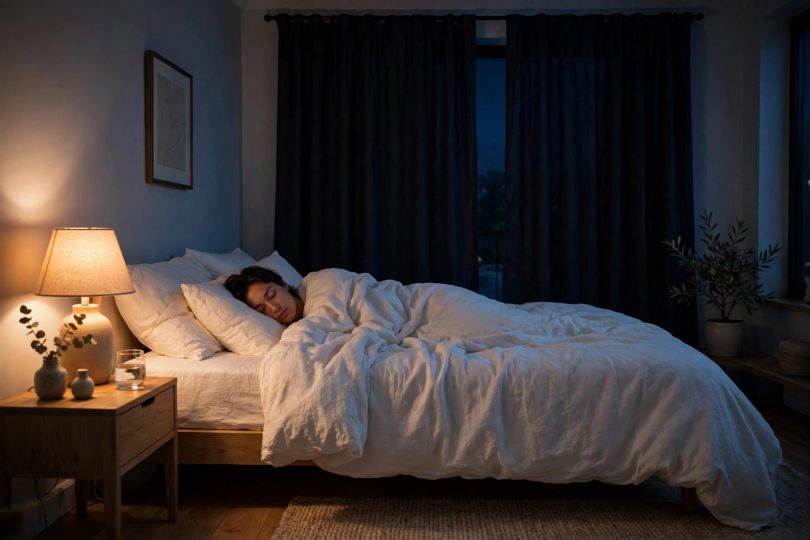
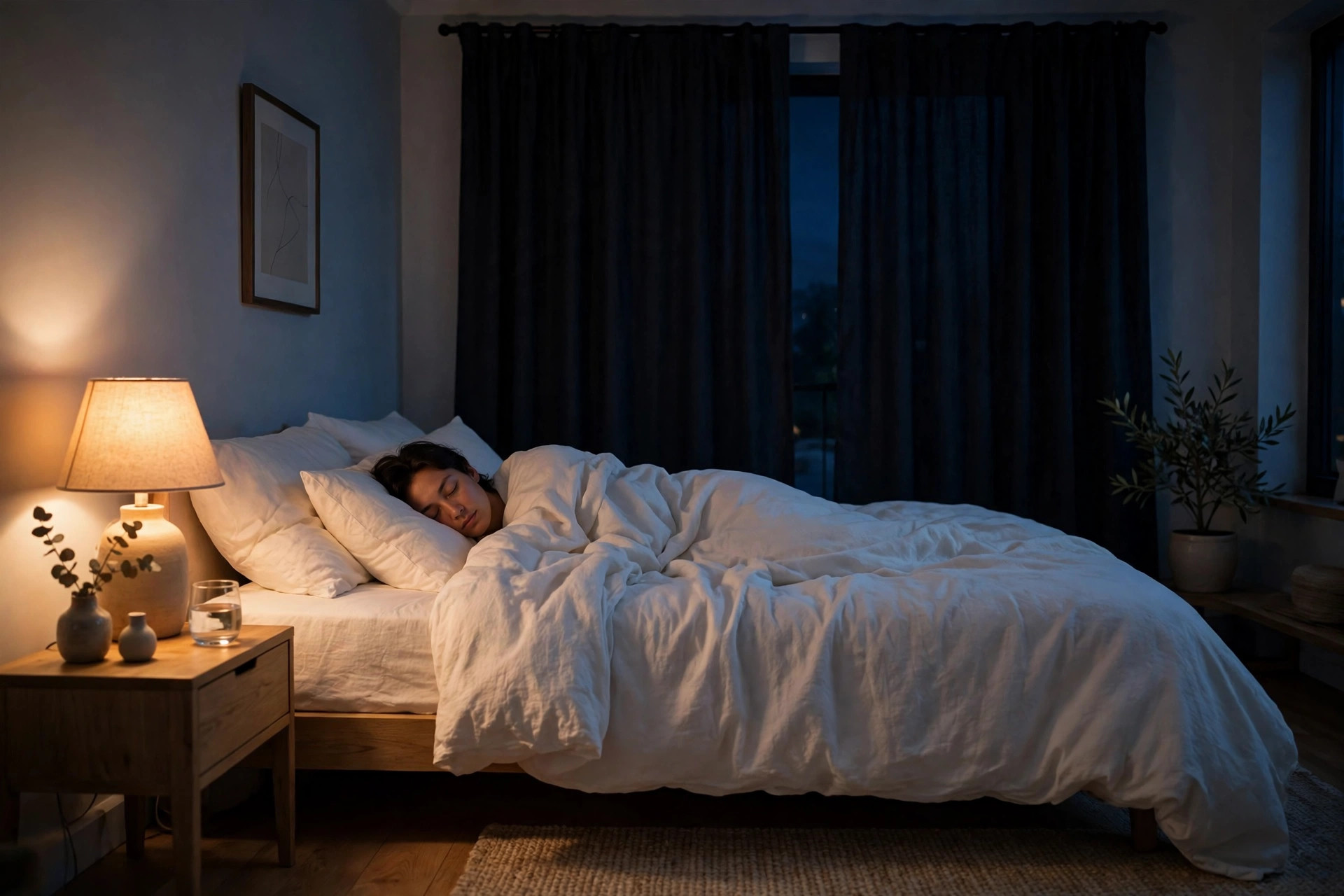
Your bedroom should be cool, dark and quiet. A slightly cool room supports the natural drop in body temperature that triggers sleep. Blackout curtains or a sleep mask block street light, and earplugs or a fan can mask irregular noise. Keep the bed for sleep rather than work or television, so your brain associates that space with rest alone.
- Temperature: aim for a cool room and breathable bedding you can adjust in layers.
- Darkness: cover standby lights and charging LEDs where possible.
- Comfort: a supportive pillow at the right height prevents the neck aches that fragment sleep.
- Air: a briefly opened window or good ventilation keeps the room feeling fresh.
Daytime Habits That Decide Your Night
Healthy sleep habits start long before bedtime. Morning daylight is the strongest signal for your body clock, so get outside within an hour of waking when you can, even for ten minutes. Regular exercise improves sleep depth, but vigorous workouts in the last hour or two before bed can keep some people wired. Caffeine deserves respect: it can linger in your system for six hours or more, so a mid-afternoon cut-off works well for many people. Alcohol is another trap. A nightcap may make you drowsy, but it fragments sleep later in the night, leaving you less rested overall.
Naps are not the enemy, but timing matters. A short nap of twenty to thirty minutes in the early afternoon can restore alertness without stealing night-time sleepiness. Long or late naps usually do the opposite. You will find more everyday routines that support rest and recovery in our Healthy Living section.
What to Do When You Cannot Sleep
Everyone has occasional bad nights. If you have been lying awake for roughly twenty minutes and feel frustrated, get up, go to a dim room and do something quiet until sleepiness returns. Tossing and turning for hours teaches your brain to associate bed with stress. Avoid checking the time repeatedly, and keep the lights low. One bad night is normal; your body will usually compensate the next evening if you keep your wake time steady.
When Poor Sleep Needs Medical Attention
See a doctor if loud snoring with pauses in breathing, persistent insomnia lasting more than a few weeks, or overwhelming daytime sleepiness is part of your life. These can signal conditions such as sleep apnoea that need proper assessment. Our health condition guide is a helpful starting point for understanding when symptoms deserve professional advice rather than self-help alone.
Build the Habits Gradually
Do not try to fix everything tonight. Choose two healthy sleep habits, for example a fixed wake time and a screen cut-off, and practise them for a week. Then add one more. Sleep responds to consistency far more than intensity, and small changes kept for a month will outperform a perfect routine abandoned after four days. Track how you feel in the morning with a simple one-to-five rating; seeing the numbers improve is powerful motivation.
Conclusion
Better rest is not a mystery. Healthy sleep habits, a regular schedule, a calm wind-down, a cool dark bedroom and sensible daytime choices, work together to deepen your sleep and brighten your days. Start small, stay consistent, and give your body the regular signals it needs. Within a few weeks, most people discover that good sleep was never about sleeping longer; it was about sleeping smarter.